Behind the Goal or Along the Touchline? Choosing a Seat by What You Want to Watch
Compare behind-the-goal and touchline seats to choose a stadium view that suits your favorite parts of the match, from goalmouth action to team movement.
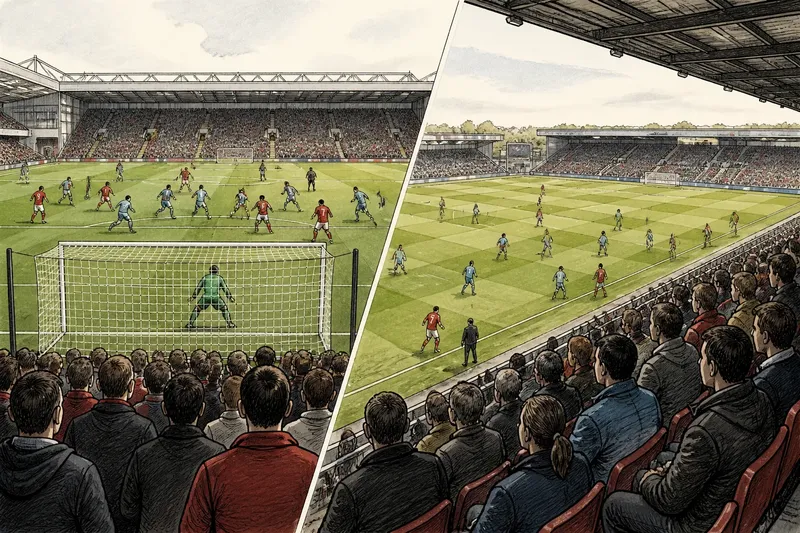
Which stadium seat helps you follow the part of the match you care about: behind the goal or along the touchline? A behind-the-goal seat frames attacks at one end; a touchline seat makes the field’s width and player movement easier to track.
The choice is less about finding a universally superior view than deciding what you want to notice. Start with the action that holds your attention, then check whether the section’s angle supports it.
What each angle emphasizes
Behind a goal, the field stretches away from you. The goal mouth, penalty area, and approaching players form a view of action moving toward a target. You can follow a run into the box or watch a goalkeeper adjust as a shot develops.
Along the touchline, the field reads more like a map. You can compare the spaces between players and follow a switch from one wing to the other. A shot toward the goal nearest you arrives at an angle, though, and bodies may overlap.
Neither viewpoint captures every useful detail. A stadium is too large for unaided eyes to reveal every close touch and tactical cue at once. The practical question is which information you want the clearest view of.
When end-on helps
Choose an end-on perspective if you want to watch how an attack approaches goal. Runs toward the penalty area, a defender closing a shooting lane, and the goalkeeper’s position all sit within the same forward-facing picture.
That alignment can make the geometry of a chance intuitive: you see the target beyond the ball and the space between them. The view is less helpful when play moves laterally or heads toward the opposite goal. Players can overlap, while the far side of the field may feel compressed.
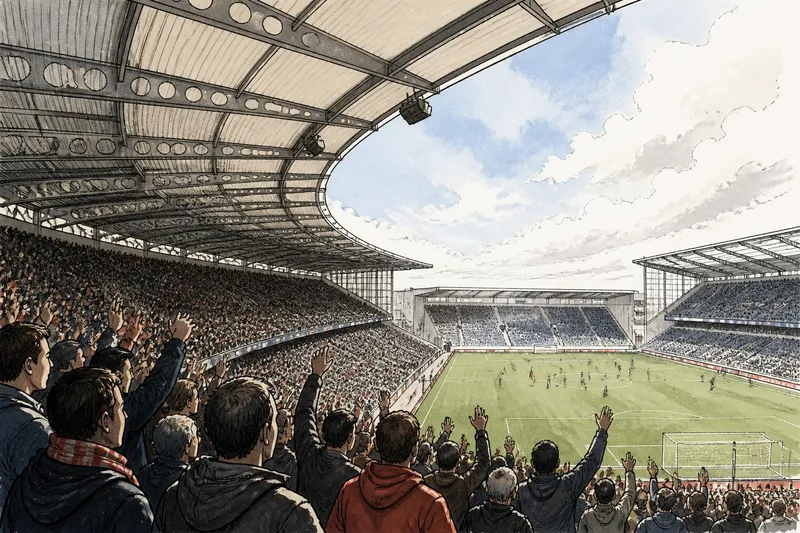
An end stand also changes character as possession moves. When play comes toward your goal, the action can feel immediate; when it travels away, you may have to follow a smaller scene in the distance.
When the touchline helps
A side-on view suits spectators who enjoy tracking how teams spread across the field. It can help you notice a player holding width, a defender stepping forward, or a teammate moving into space away from the ball.
The familiar field layout also makes it easier to follow play as it changes ends. You still turn your head, but the direction of movement remains easier to place within the whole field.
The trade-off is at the goal. A shot toward the near target appears from the side, so the goal frame looks narrower than it does from directly in front. A row of players can also hide the ball during a crowded attack.
How to choose your focus
Ask which moment you most want to follow. If it is a shot, save, or scramble in the penalty area, an end-on seat may suit you. If it is a team shifting across the field or a player finding an open channel, a touchline seat may make that movement easier to read.
Then think about your viewing habit. Do you stay with the ball and the contest around it, or scan beyond the play for the next movement? The first preference often fits the direct framing of an end stand; the second can benefit from the broader layout along the side.
Imagine you have two available seats: one behind the goal and one near the middle of the touchline. You most want to understand how a team creates space before a pass. Choosing the touchline seat should make players spreading across the field and moving into channels easier to compare; choosing the end-on seat instead puts the approaching goal and penalty area in a more direct frame. That is the trade-off, not a promise that every movement will remain visible.
What to check before choosing
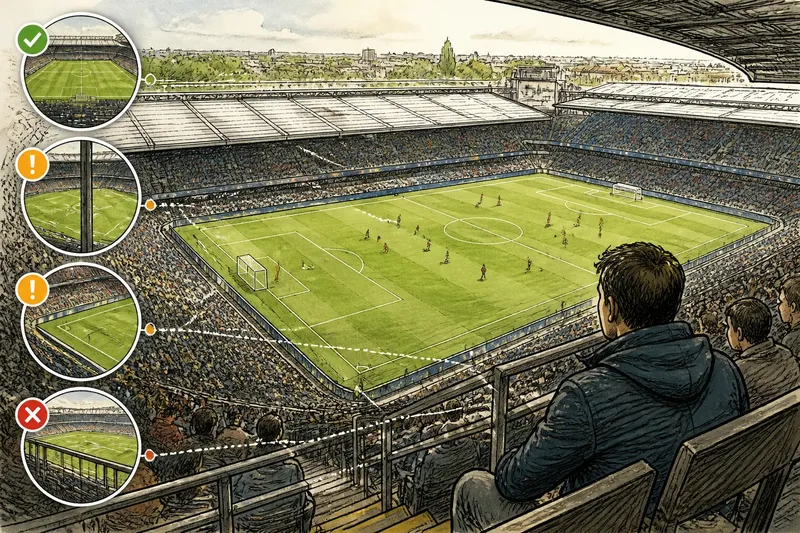
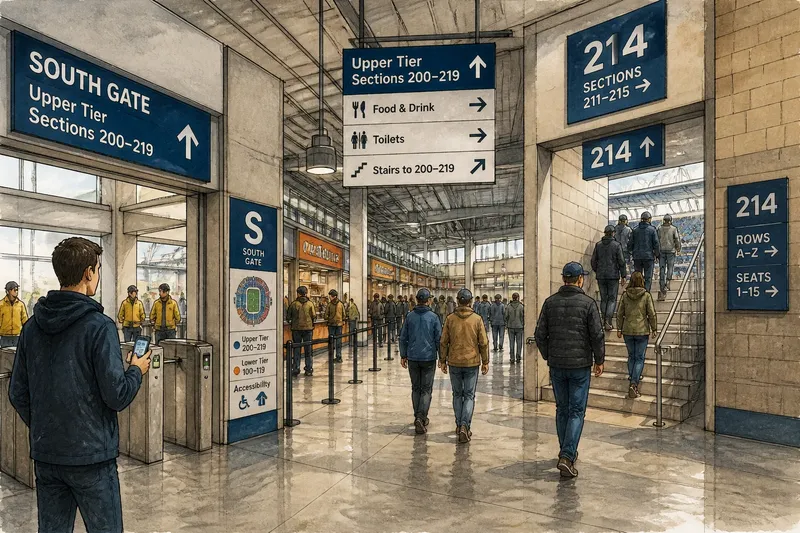
Stand names can hide meaningful differences between sections. Check the seating map or available seat-view images for the actual angle, then look for visible obstructions. A corner section blends side-on and end-on qualities, but the balance changes with its position.
- Check whether the seat is directly behind the goal or nearer a corner; if you want the goal centered, choose the more directly aligned section, otherwise consider the diagonal corner view.
- Check how much of the opposite half appears in the seat view; if you want to track play away from you, choose the section that leaves more of that area visible, otherwise prioritize the end you want to watch.
- Check for railings or partitions crossing the displayed view; if they obscure the field, choose another section, otherwise keep the seat in consideration.
- Check whether a camera platform or support column sits in the sightline; if it blocks the area you care about, look elsewhere, otherwise focus on the seat’s angle.
- Check whether a corner seat gives you the balance you want between the goal face and the length of the field; if you want a more direct goal view, move toward the end stand, otherwise keep the corner option.
- Check the view from the specific row when images are available; if nearby bodies or barriers obscure the action, choose a clearer listed view, otherwise let small differences in angle go.
Row height also changes what is visible around people seated in front. A lower row may put the nearby contest directly in your view, while a higher row can expose more of the arrangement across the field. Check images for the section and row rather than assuming one height suits everyone.
It is not worth chasing tiny differences in angle that you cannot verify. Decide whether you care more about goal-facing action or movement across the field, then check for obvious obstructions and leave the fine-grained comparisons alone.
Which seat fits your match?
Is behind the goal good for watching goals?
It puts the target and the approach to it in a direct frame, which can make shots, saves, and crowded penalty-area action easier to follow. The opposite goal remains distant, and sideways movement may be harder to read.
Is a touchline seat better for tactics?
It can make player spacing, width, and movement away from the ball easier to compare. Close contests may be less clear when players overlap or the action runs toward a goal at an angle.
What is a corner seat like?
A corner seat combines a diagonal view of the nearest goal with a view along much of the field. Check the specific section’s seat-view image, because corner positions do not all offer the same balance.
Should I choose a seat near the center?
A central touchline seat gives a balanced view of both halves; a central end seat aligns you with one goal. Choose the center that matches the action you most want to follow.
A clear choice
Behind-the-goal and touchline seats suit different ways of watching: one centers the approach to a target, while the other makes movement across the field easier to follow. Neither is the best stadium seat for everyone; the right choice depends on the match details you want in view.
For a quick decision, search for a behind-the-goal or touchline seat view, name your preferred kind of action, and inspect the actual section for obstructions. That check can matter more than a stand’s label, and it gives your attention a clearer place to land.