What to Notice When You Arrive Early at a Stadium
A stadium early arrival gives you time to notice the approach, crowd and changing mood, then choose where to spend your pregame minutes without getting in the way.
What should you do with the minutes before a stadium fills? A stadium early arrival gives you time to see how the ground meets its neighborhood, how people gather, and how a quiet venue changes as kick-off nears.
You do not need to tour every corner or bring a notebook. Choose a public spot outside, follow the main approach, or go in and watch the stands fill. Each option offers a different view, and you can switch if the timing and venue allow.
Three arrival approaches
Linger outside if you enjoy buildings and public space. Follow the crowd if you are curious about matchday rituals. Head inside if you would rather settle in and watch the venue wake up. These are different lenses, not competing itineraries.
A quick look at the façade can lead into a walk with supporters; a seat in the stand can be a calm reward for taking the longer route. Choose based on what you most want to remember: the ground in its setting, the movement toward it, or the moment the venue feels occupied.
Read the approach
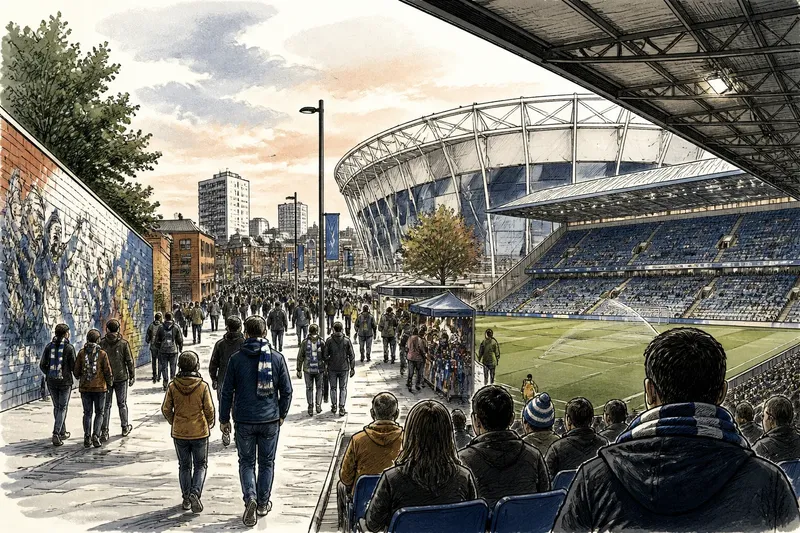
Begin far enough from the entrance to see the stadium sharing the scene with shops, houses, transit stops or open space. Notice what first signals that the ground is near. It might be a roofline above the buildings, a cluster of scarves, a change in street signs, or vendors setting up nearby.
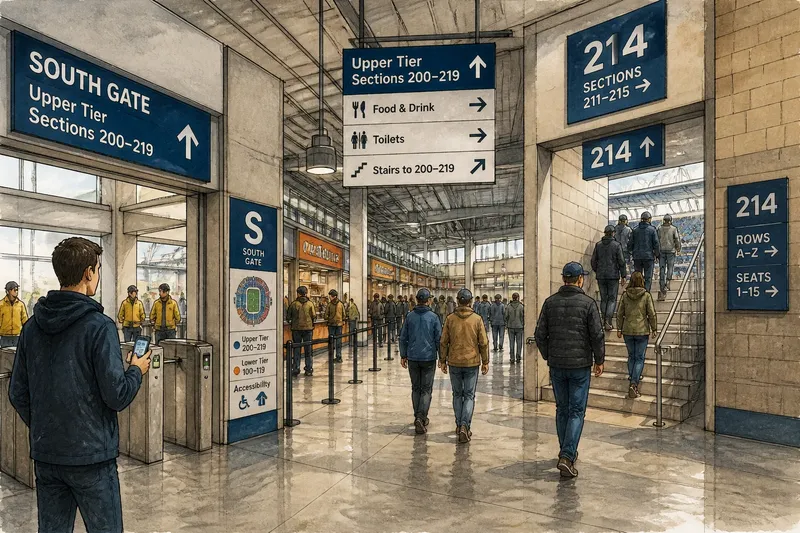
Look at the route’s shape and rhythm. Does the pavement widen as people gather? Do signs appear gradually or cluster near the gates? Is there a plaza where groups can pause, or do people keep moving toward the perimeter? You are not grading the design. You are noticing whether the approach invites people to look, gather, keep pace or wait.
A side street can show how the stadium meets nearby buildings, while a longer view reveals whether the structure appears all at once or in pieces. Ground-level materials matter too: brick, glass, metal mesh, painted concrete and banners take on different character in changing light. A wall that feels imposing nearby may recede into the neighborhood from farther away.
Choose a public place where you can stop without blocking a doorway, sidewalk or queue. Follow local signs and staff directions. Do not wander into service lanes or restricted areas; the point is to notice the visitor’s approach, not find a hidden route.
Follow the gathering
Watch how separate groups become one crowd while keeping their own rhythms. Families may move at an unhurried pace; friends may pause to meet; supporters may arrive in colors visible from a distance. Notice how the route accommodates different speeds and reasons for being there, rather than judging who belongs most.
Small pauses create a loose choreography. People check tickets, adjust a scarf, look for companions or turn toward a food stall. A broad approach may let one group stop while another passes. A narrow pinch point may slow everyone together. Crowd size, event arrangements and weather also shape what happens, so one moment does not tell the whole story.
Listen for changes in sound along the route. Conversation may blur into a steady murmur as more people arrive. A chant may begin in a small group and travel along the street, or the approach may stay conversational until the gates. Either pattern hints at the event’s social tone, not what the match itself will feel like.
Say you arrive alone at an unfamiliar ground with time before entry. You stop in a public square beside the approach and notice groups pausing near a distinctive mural before moving on. You use the mural to orient yourself, then follow the crowd toward the entrance. The result is a recognizable landmark and a clearer sense of the route; the tradeoff is spending those minutes outside rather than watching the stands fill.
Watch the mood form
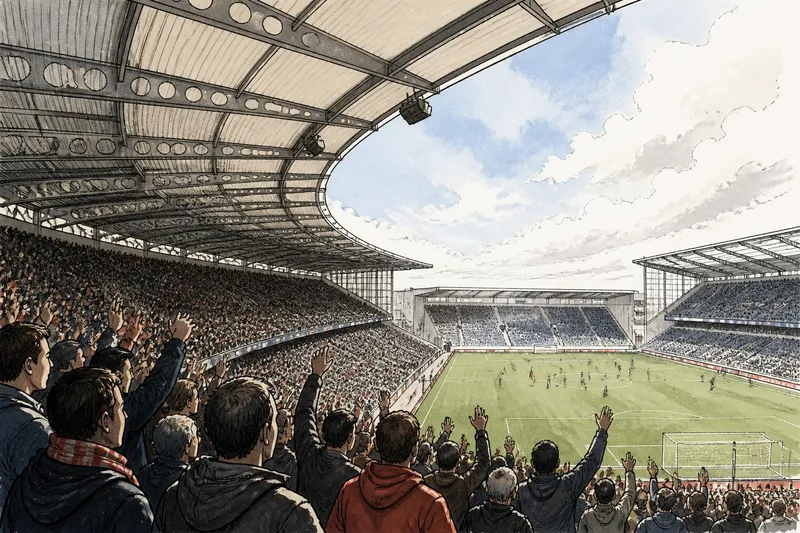
Once inside, pause in a permitted public area before heading to your seat. Notice what lies beyond the entrance: the open bowl, a slice of sky, the far stand, the pitch or the roof framing the space. The first impression may be scale, color or enclosure. Watch how it changes as people take their places.
Atmosphere is not just noise. It also appears in how people orient themselves. Some turn toward the field at once; others look for companions, read signs or study the stands. Staff greetings, music, announcements and flags add their own layers. Notice what catches your attention first and whether it stays central as the venue fills.
Look for small transitions rather than one dramatic switch. An empty row becomes a conversation. A section begins to respond together. The pitch crew finishes its visible preparations, or the teams’ arrival shifts attention toward the field. A pause in the music can make the crowd’s own voice more apparent.
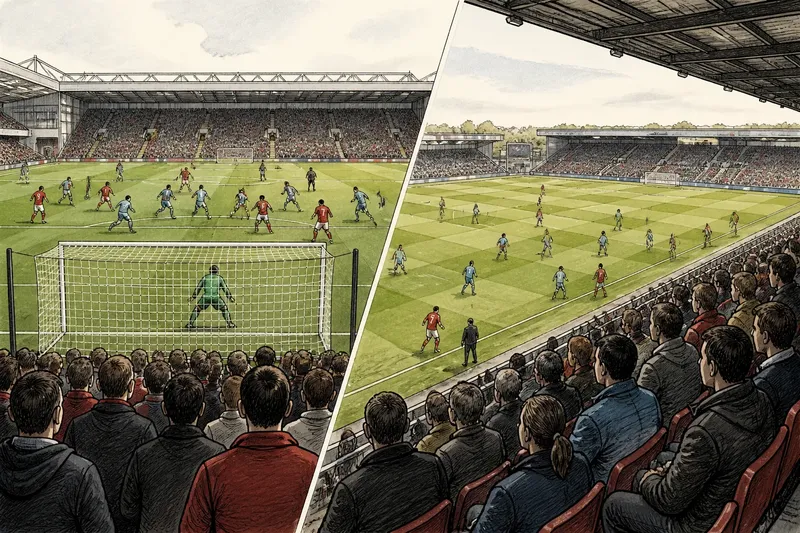
A public concourse may offer a broad view of movement, while your seat gives you a more personal sense of the space around your section. Follow venue rules and keep access routes clear. If the area is busy or staff are directing people onward, move along instead of trying to hold a perfect vantage point.
Choose a pace?
Is arriving early worth it?
It can be, if you enjoy seeing a place before the main event takes over. A short pause can make the route feel more familiar, but there is no need to arrive far ahead if you would rather spend that time elsewhere.
Should I stay outside or go in?
Stay outside if the stadium’s relationship with its surroundings interests you, especially where the street changes as you approach. Go in if you want to watch the stands and public areas fill. Choose the scene you would be sorry to miss.
What should I bring for observing?
Nothing beyond what you already need for the event. A phone can help with a quick note or photo where permitted, but looking around without a screen often makes small shifts easier to notice.
How do I avoid getting in the way?
Use public areas, stand clear of entrances and queues, and follow signs and staff directions. If a spot becomes crowded, step aside or keep moving rather than treating it as a viewing platform.
Pick a useful vantage
For a first visit, following the crowd can combine practical orientation with a sense of the occasion. Choose the exterior linger if architecture and neighborhood feel matter most. Settle inside if you want a quieter transition and a close view of the venue filling in.
- Check whether your chosen spot is a public area; if it is, pause there, but if signs restrict access, move to an open sidewalk or plaza.
- Check whether you would block a doorway or queue; if you would, step farther aside, but if the route remains clear, keep observing from that spot.
- Check whether the approach has a visible landmark, such as a mural or transit stop; if it does, use it to orient yourself, but if it does not, follow posted signs toward the entrance.
- Check whether people can pass around you; if they can, stay briefly, but if the flow narrows, move along to a broader public area.
- Check whether the exterior or interior interests you more; if the street and façade do, linger outside, but if the filling stands do, enter and find your seat.
- Check whether staff are directing people onward; if they are, follow their directions, but if the area is open and permitted, continue observing without blocking access.
There is no need to circle the building, chase a hidden viewpoint or photograph every sign. Those efforts add little if they pull you away from the ordinary details that make an arrival distinctive. A single clear vantage point and a little patience are enough.
Keep one question in mind as you move: what changed since you first saw this place? It might be the sound, the crowd’s density, the color at the gates or the shift in your attention from the street to the field. A stadium early arrival is most rewarding when you notice that change and carry a clearer sense of the shared place to your seat.